

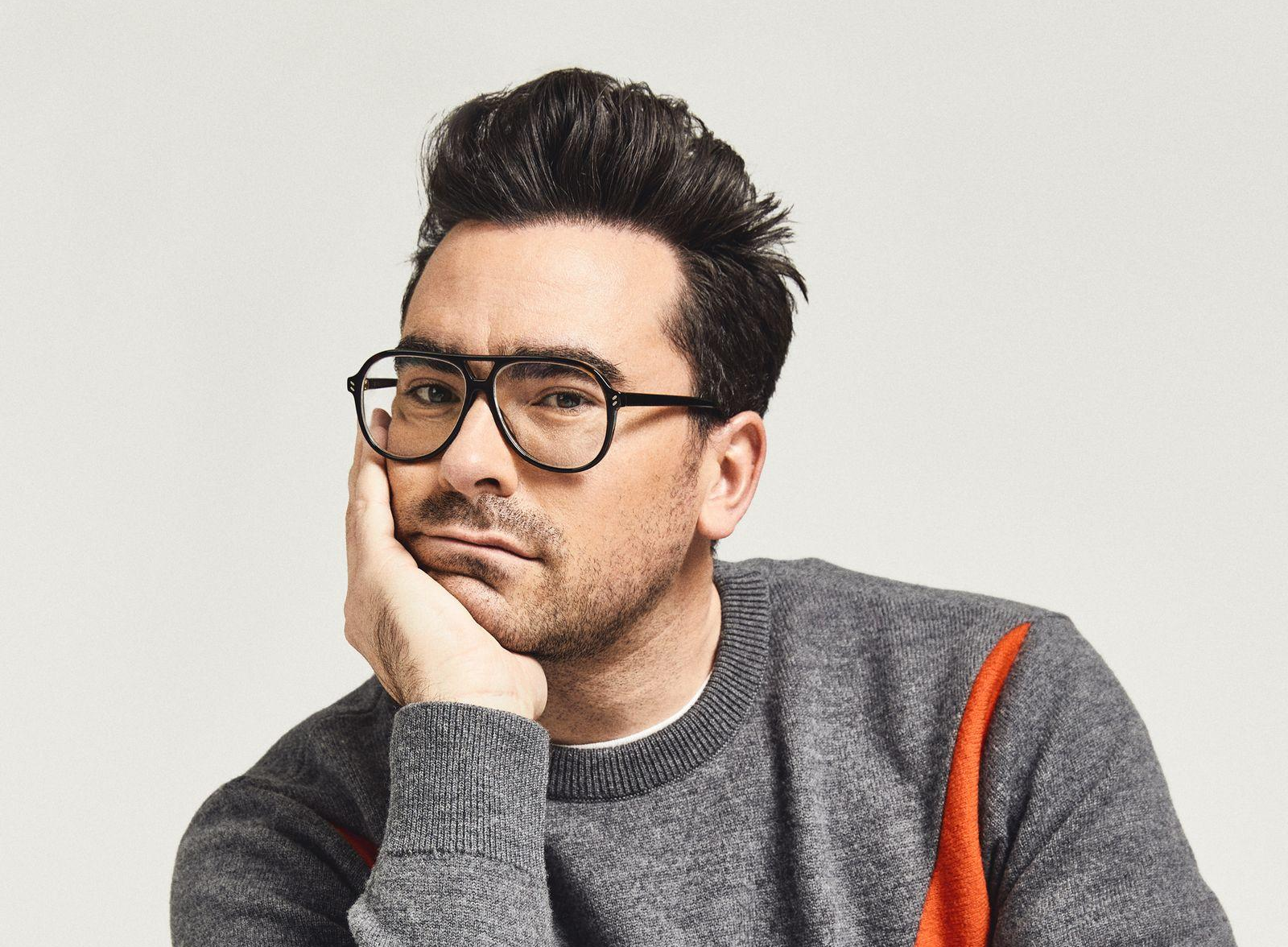
For years, Dan Levy was synonymous with precision. As the co-creator, writer, director, and star of Schitt’s Creek, he built a cultural phenomenon defined by emotional nuance, sharp humor, and meticulous character development. But behind that polished success was a level of pressure that few audiences ever saw—pressure so intense that it manifested physically.
During the final season of Schitt’s Creek, Levy experienced severe anxiety that even affected his mobility, requiring daily physical treatment just to continue working. It was an extreme response to an equally extreme expectation: delivering a perfect ending to a beloved global hit. That experience now serves as a critical turning point in his creative evolution.
With his latest series, Big Mistakes, Levy is intentionally stepping away from perfectionism and toward something far less predictable—risk.
At its core, Big Mistakes is a tonal hybrid, blending crime thriller elements with family comedy. Levy plays Nicky, a tightly wound reverend who becomes entangled in organized crime alongside his chaotic sister. It’s a premise that thrives on contradiction: morality versus survival, structure versus chaos. This duality is no accident. Levy has long been fascinated by what happens when people are pushed beyond their limits.
“I think we can be our funniest when we are our most unhinged,” he explains, reflecting a creative philosophy that embraces emotional extremes rather than controlled storytelling.
That idea marks a clear departure from the comforting tone of Schitt’s Creek. While both shows explore family dynamics, Big Mistakes leans into instability. The characters are not just navigating personal growth—they are dealing with high-stakes consequences, both emotional and literal. This shift allows Levy to explore a broader emotional spectrum, one that includes fear, tension, and moral ambiguity.
Yet despite the tonal differences, certain thematic threads remain consistent. Levy continues to center stories around family—specifically, the complicated, often contradictory bonds that define them. In Big Mistakes, as in his earlier work, family is both a source of support and conflict. The show underscores a key idea: that families often reveal their truest selves in moments of crisis.
Levy’s attention to character depth is rooted in his creative process. Early in his career, he learned the importance of building detailed backstories for each character—down to seemingly insignificant life events. This method allows narratives to unfold organically, with characters reacting in ways that feel authentic rather than scripted. It’s a technique that helped make Schitt’s Creek resonate so widely and continues to shape his newer projects.
However, Big Mistakes is not just a creative experiment—it’s also deeply personal. The show draws inspiration from Levy’s own fears, particularly the anxiety of losing control and being forced into unfamiliar or uncomfortable situations. For a character like Nicky, whose life is defined by structure and moral clarity, being thrust into criminal activity creates a powerful internal conflict.
This theme mirrors aspects of Levy’s own life. Growing up as a gay child who felt pressure to conceal parts of his identity, he developed a heightened awareness of perception and expectation. That experience—of navigating the gap between who you are and who the world expects you to be—continues to inform his storytelling.
“I was constantly trying to accommodate people’s expectations,” Levy recalls of his younger years, highlighting the emotional foundation behind many of his characters.
That tension between authenticity and expectation is particularly relevant in today’s entertainment landscape, where creators often face intense scrutiny. Levy himself is no stranger to this pressure. Following the unprecedented success of Schitt’s Creek—including multiple Emmy wins—there is an inherent expectation that his next project must match or exceed that achievement.
But Levy is actively resisting that mindset.
Rather than chasing universal approval, he is prioritizing creative fulfillment. He acknowledges that Big Mistakes may not resonate with everyone—and he’s comfortable with that. In fact, he prefers a polarized reaction over indifference, seeing it as a sign that the work is engaging and meaningful.
This perspective reflects a broader shift in his priorities. Earlier in his career, Levy admits he was driven by a desire to prove himself—to critics, to audiences, and even to himself. Now, that motivation has evolved into something more sustainable: a focus on creating work that feels honest and impactful.
Another defining aspect of Levy’s work is his commitment to queer storytelling. Both Schitt’s Creek and Big Mistakes feature queer characters navigating complex emotional landscapes, often dealing with issues of identity, acceptance, and belonging. In Big Mistakes, this is explored through Nicky’s secret relationship, adding another layer of tension to an already complicated narrative.
Levy’s approach to these stories is notable for its nuance. Rather than presenting identity as a singular struggle, he highlights the multiple “closets” people can inhabit—social, emotional, and professional. This layered representation reflects a more realistic portrayal of modern identity, one that resonates with a diverse audience.
Ultimately, Big Mistakes represents a new chapter for Levy—not just as a creator, but as an artist willing to embrace uncertainty. It’s a project that trades safety for experimentation, polish for rawness, and predictability for risk.
And perhaps that’s the most significant transformation of all.
After years of striving for perfection, Dan Levy is now focused on something far more compelling: simply making work that connects.
