

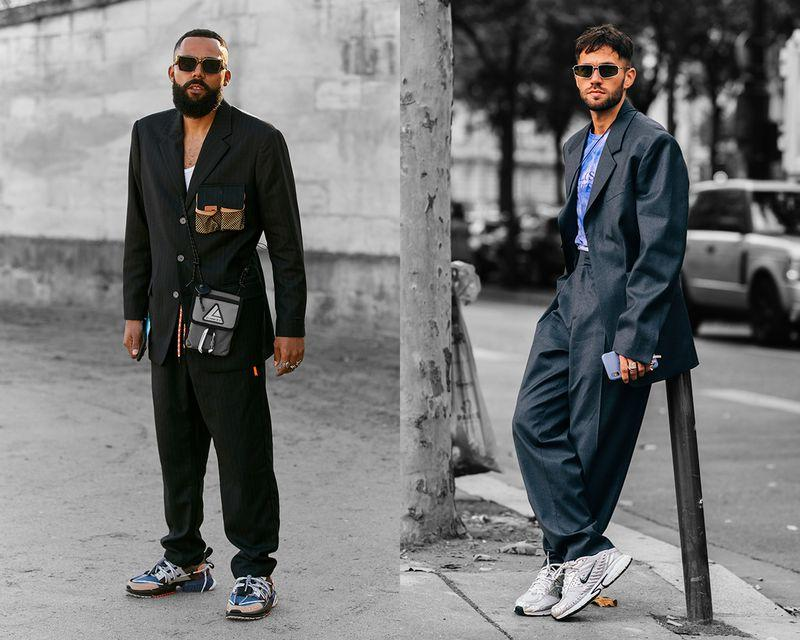
For years, men’s tailoring was defined by precision—sharp shoulders, slim cuts, and structured silhouettes that emphasized control and formality. But today, that narrative is shifting. Across global runways, from Paris Fashion Week to Milan Fashion Week, a new aesthetic is taking over: relaxed tailoring.
This movement isn’t about abandoning tailoring—it’s about redefining it. Designers are softening the rules, introducing silhouettes that prioritize ease, fluidity, and comfort while still maintaining a sense of sophistication. The result is a style language that feels modern, wearable, and deeply aligned with how men want to dress today.
At the forefront of this shift are designers like Miuccia Prada, who has consistently championed understated elegance through relaxed forms. At Prada, suits are no longer rigid uniforms; they are fluid garments that move with the body. Oversized blazers, dropped shoulders, and wide-leg trousers define the silhouette, creating a look that feels both effortless and intentional.
Similarly, Giorgio Armani—long considered a pioneer of soft tailoring—continues to influence this evolution. His philosophy of comfort-driven elegance has become increasingly relevant, as modern menswear leans toward pieces that balance structure with ease. What was once revolutionary is now becoming the standard.
The rise of relaxed tailoring also reflects broader cultural changes. The modern man is no longer dressing solely for formality or tradition; he is dressing for versatility. A suit today needs to transition seamlessly from work to social settings, from formal to casual environments. Relaxed tailoring answers this need by offering flexibility without compromising style.
Fabric plays a crucial role in this transformation. Lightweight materials, softer weaves, and unstructured construction techniques allow garments to drape naturally. Linen blends, fluid wool, and technical fabrics are replacing stiff, heavy textiles, making tailoring more adaptable to different climates and lifestyles.
Another defining element is proportion. Instead of hugging the body, garments now create space around it. This shift toward volume—seen in wider trousers, longer jackets, and layered styling—adds a sense of movement and modernity. It also opens the door for personal expression, allowing individuals to experiment with how they wear and style their pieces.
Importantly, relaxed tailoring bridges the gap between formalwear and streetwear. It pairs effortlessly with sneakers, T-shirts, and casual accessories, making it more accessible to a broader audience. Brands like Zegna have embraced this hybrid approach, blending luxury craftsmanship with everyday wearability.
What makes this trend particularly powerful is its longevity. Unlike fleeting fashion moments, relaxed tailoring represents a fundamental shift in how menswear is designed and consumed. It’s not just about looking different—it’s about feeling different.
In essence, relaxed tailoring signals a move toward authenticity. It allows men to embrace style without constraint, to feel comfortable without sacrificing elegance. And as designers continue to explore this space, one thing is clear: the future of menswear will be less about rigid rules and more about refined freedom.
